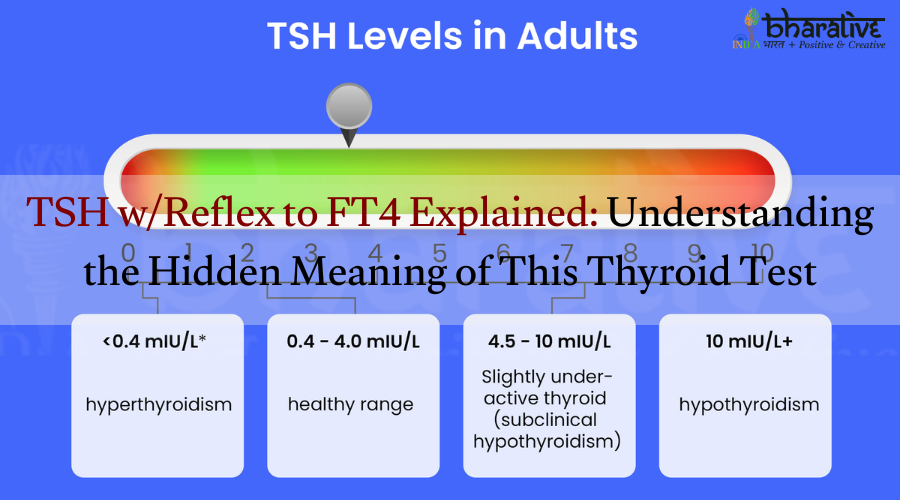
TSH w/Reflex to FT4 Explained: Understanding the Hidden Meaning of This Thyroid Test
TSH w/Reflex to FT4: Hidden Thyroid Test Meaning
Thyroid health plays a critical role in maintaining the body’s metabolism, energy levels, and overall hormonal balance. When doctors suspect a thyroid issue, one of the most commonly ordered laboratory tests is TSH with Reflex to FT4.
If you have recently received blood test results showing this term, you might be wondering what it actually means. While the phrase may sound complicated, it refers to a very common and useful diagnostic test that helps doctors evaluate thyroid function more accurately.
In this guide, we will explain what TSH with Reflex to FT4 means, why healthcare providers order it, how the testing process works, and what the results may indicate about your thyroid health.
What Is the Thyroid Gland?
Before understanding the test, it helps to know the role of the thyroid gland in the body.
The thyroid is a small butterfly-shaped gland located at the front of the neck. Despite its small size, it controls many essential functions by producing hormones that regulate metabolism.
These hormones influence several bodily processes, including:
- Energy production
- Body temperature
- Heart rate
- Weight management
- Brain function
- Digestion
If the thyroid produces too much or too little hormone, it can affect many parts of the body.
What Does TSH Mean?
TSH stands for Thyroid-Stimulating Hormone.
This hormone is produced by the pituitary gland, which is located at the base of the brain. The pituitary gland acts like a control center that tells the thyroid how much hormone to produce.
When thyroid hormone levels drop, the pituitary gland releases more TSH to stimulate the thyroid. When thyroid hormone levels are high, TSH production decreases.
Because of this relationship, measuring TSH levels is one of the most effective ways to evaluate thyroid function.
What Is FT4?
FT4 stands for Free Thyroxine.
Thyroxine, also called T4, is one of the primary hormones produced by the thyroid gland. Most of the T4 in the bloodstream is bound to proteins and inactive.
However, a small portion remains free, meaning it is available for the body to use. This is called Free T4 (FT4).
Measuring FT4 helps doctors understand how much active thyroid hormone is circulating in the body.
What Does “TSH with Reflex to FT4” Mean?
The phrase “TSH with Reflex to FT4” refers to a testing method used in many laboratories.
Instead of performing multiple thyroid tests immediately, the lab follows a step-by-step approach:
- The laboratory first measures TSH levels.
- If the TSH level falls outside the normal range, the lab automatically performs an FT4 test.
- This additional test helps doctors better understand the thyroid condition.
This approach saves time, reduces unnecessary testing, and provides more targeted information.
Why Doctors Order This Test
Healthcare providers order TSH with Reflex to FT4 for several reasons.
Diagnosing Thyroid Disorders
The test helps identify common thyroid conditions such as:
- Hypothyroidism (underactive thyroid)
- Hyperthyroidism (overactive thyroid)
Evaluating Symptoms
Doctors may recommend the test if a patient experiences symptoms related to thyroid imbalance.
Common symptoms include:
- Fatigue
- Unexplained weight changes
- Hair thinning
- Mood changes
- Irregular heartbeat
- Temperature sensitivity
Monitoring Thyroid Treatment
Patients who are already receiving thyroid medication may undergo this test regularly to ensure hormone levels remain stable.
How the Test Is Performed
The TSH with Reflex to FT4 test is a simple blood test.
A healthcare professional collects a small blood sample from a vein in the arm. The sample is then sent to a laboratory where hormone levels are measured.
The procedure usually takes only a few minutes, and most people experience minimal discomfort.
In many cases, fasting is not required unless other blood tests are performed at the same time.
Understanding TSH Levels
TSH levels help doctors determine whether the thyroid is functioning normally.
Typical reference ranges vary slightly between laboratories, but generally fall within a certain range.
High TSH Levels
Elevated TSH levels often suggest hypothyroidism, meaning the thyroid is not producing enough hormones.
In this situation, the pituitary gland releases more TSH to stimulate the thyroid.
Symptoms of hypothyroidism may include:
- Fatigue
- Weight gain
- Dry skin
- Depression
- Cold sensitivity
If TSH is high, the lab reflexively performs the FT4 test to confirm the diagnosis.
Low TSH Levels
Low TSH levels may indicate hyperthyroidism, where the thyroid produces excessive hormones.
In this case, the pituitary gland reduces TSH production because the body already has enough thyroid hormone.
Symptoms may include:
- Rapid heartbeat
- Weight loss
- Anxiety
- Sweating
- Heat intolerance
Again, the FT4 test helps clarify the hormone imbalance.
Why the Reflex Test Is Important
The reflex testing system improves efficiency in thyroid diagnosis.
Instead of ordering multiple tests initially, the laboratory only performs additional testing when necessary.
This approach offers several benefits:
- Faster diagnosis
- Reduced healthcare costs
- More precise interpretation of thyroid function
Doctors can quickly identify whether thyroid hormones are too high or too low.
Common Thyroid Disorders Detected
The TSH with Reflex to FT4 test helps detect several common thyroid conditions.
Hypothyroidism
This condition occurs when the thyroid gland produces insufficient hormones.
Possible causes include:
- Autoimmune disease
- Thyroid surgery
- Certain medications
- Iodine deficiency
Treatment typically involves hormone replacement therapy.
Hyperthyroidism
Hyperthyroidism happens when the thyroid becomes overactive and releases too much hormone.
Possible causes include:
- Graves’ disease
- Thyroid nodules
- Inflammation of the thyroid gland
Treatment may include medication, radioactive iodine therapy, or surgery.
Factors That Can Affect Thyroid Test Results
Several factors can influence thyroid hormone levels and test results.
These may include:
- Pregnancy
- Medications
- Stress
- Illness
- Nutritional deficiencies
Doctors consider these factors when interpreting results.
When Should You Get Tested?
Doctors may recommend thyroid testing if you experience symptoms suggesting hormonal imbalance.
Testing may also be recommended for individuals with risk factors such as:
- Family history of thyroid disease
- Autoimmune disorders
- Previous thyroid treatment
- Pregnancy
Regular screening can help detect thyroid problems early.
Maintaining Healthy Thyroid Function
While some thyroid disorders cannot be prevented, certain habits support overall hormonal health.
Helpful lifestyle habits include:
- Eating a balanced diet
- Maintaining healthy iodine intake
- Managing stress levels
- Getting regular medical checkups
Early detection and treatment often lead to better outcomes.
Conclusion
The TSH with Reflex to FT4 test is an important tool for evaluating thyroid health. By first measuring TSH levels and automatically testing FT4 when necessary, doctors gain a clearer understanding of how well the thyroid gland is functioning.
This efficient testing method helps identify thyroid disorders such as hypothyroidism and hyperthyroidism while reducing unnecessary laboratory testing.
If your doctor has ordered this test or you have received results showing “TSH with Reflex to FT4,” understanding what it means can help you better manage your health and discuss the results with your healthcare provider.
You may also like ...