
4 Stages of Appendicitis: Hidden Signs You Must Recognize Early
4 Stages of Appendicitis: Hidden Signs You Must Recognize
Appendicitis is one of the most common medical emergencies that requires immediate attention. It occurs when the appendix becomes inflamed and infected. If not treated in time, the condition can worsen and lead to serious complications, including rupture of the appendix and infection spreading throughout the abdomen.
Many people assume appendicitis appears suddenly with severe pain, but the condition usually develops in stages. Recognizing the early warning signs can help individuals seek treatment before the problem becomes life-threatening.
Understanding the four stages of appendicitis can help people identify symptoms earlier and take action quickly.
What Is the Appendix?
The appendix is a small, tube-shaped organ attached to the large intestine. It is located in the lower right side of the abdomen.
Although scientists once believed the appendix had no function, research now suggests it may play a small role in maintaining healthy gut bacteria.
However, when the appendix becomes blocked or infected, it can swell and fill with bacteria, leading to appendicitis.
What Causes Appendicitis?
Appendicitis usually occurs when the appendix becomes blocked.
Common causes include:
- hardened stool blocking the appendix opening
- bacterial infections
- swollen lymph tissue
- digestive tract infections
- parasites in rare cases
When the appendix becomes blocked, bacteria multiply rapidly inside it. This causes inflammation, swelling, and increasing pressure.
Without treatment, the appendix can eventually burst.
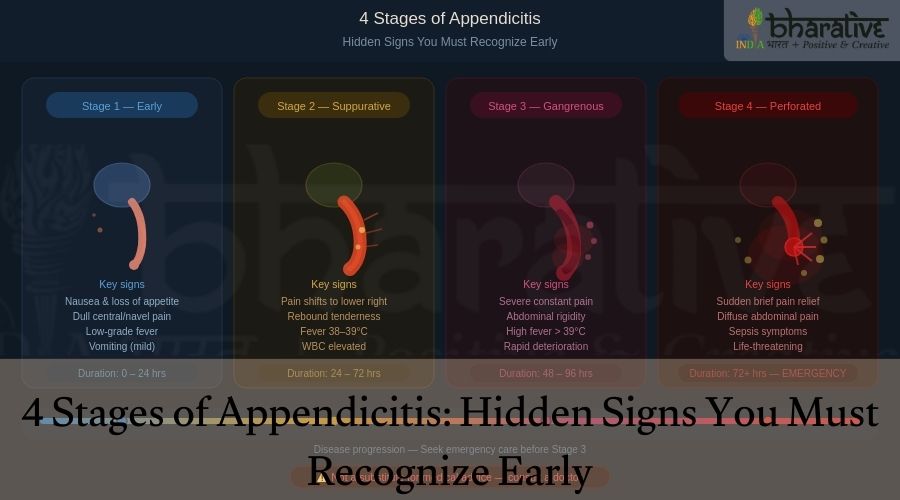
The 4 Stages of Appendicitis
Appendicitis generally develops through four stages, each with distinct symptoms and risks.
Recognizing these stages can help prevent complications.
Stage 1: Early Appendicitis (Initial Inflammation)
The first stage begins when the appendix becomes blocked and starts to swell.
At this point, symptoms may appear mild and easy to ignore.
Common symptoms
- dull pain around the belly button
- mild abdominal discomfort
- loss of appetite
- nausea
- slight fever
Many people initially mistake these symptoms for stomach upset or indigestion.
However, the pain often gradually moves toward the lower right side of the abdomen.
Stage 2: Suppurative Appendicitis (Infection Begins)
During the second stage, bacteria multiply rapidly inside the appendix, causing pus to form.
The inflammation becomes more severe, and symptoms intensify.
Symptoms during this stage
- sharp pain in the lower right abdomen
- increased nausea
- vomiting
- fever
- abdominal tenderness
- difficulty walking or standing upright
Pressing on the lower right side of the abdomen may cause significant pain.
At this stage, medical treatment is urgently needed to prevent further complications.
Stage 3: Gangrenous Appendicitis (Tissue Damage)
If appendicitis is not treated, the appendix tissue may begin to die due to lack of blood supply.
This stage is known as gangrenous appendicitis.
The damaged tissue weakens the appendix wall, increasing the risk of rupture.
Symptoms may include
- severe abdominal pain
- high fever
- chills
- rapid heart rate
- extreme fatigue
- abdominal swelling
Some patients may briefly feel relief if the nerve endings become damaged, but this does not mean the condition is improving.
In reality, the appendix is becoming more dangerous.
Stage 4: Ruptured Appendix (Perforation)
The final stage occurs when the appendix bursts or ruptures.
This allows bacteria and infected fluid to spread into the abdominal cavity, causing peritonitis, a life-threatening infection.
Symptoms of a ruptured appendix
- sudden worsening of abdominal pain
- pain spreading throughout the abdomen
- high fever
- severe weakness
- vomiting
- bloated stomach
This stage is a medical emergency that requires immediate surgery and intensive treatment.
Why Early Diagnosis Is Important
Appendicitis can progress quickly. In many cases, the appendix may rupture within 24 to 72 hours after symptoms begin.
Early diagnosis allows doctors to remove the appendix before it ruptures.
Timely treatment significantly reduces complications and speeds recovery.
How Doctors Diagnose Appendicitis
Doctors use several methods to diagnose appendicitis.
Physical examination
A doctor checks for tenderness in the lower right abdomen.
Blood tests
Blood tests can reveal signs of infection, such as elevated white blood cell counts.
Imaging tests
Imaging methods such as ultrasound or CT scans help confirm inflammation of the appendix.
These tools help doctors determine the stage of appendicitis and the best treatment option.
Treatment Options
The standard treatment for appendicitis is surgical removal of the appendix, known as an appendectomy.
Laparoscopic surgery
This minimally invasive procedure uses small incisions and a camera to remove the appendix.
Recovery is usually faster with this method.
Open surgery
In more severe cases, especially when the appendix has ruptured, doctors may perform open surgery to clean the infection.
After surgery, antibiotics are often given to prevent infection.
Recovery After Appendectomy
Most people recover fully after appendectomy surgery.
Recovery time varies depending on the severity of the condition.
Typical recovery includes:
- rest for several days
- gradual return to normal activity
- avoiding heavy lifting for a few weeks
- taking prescribed medications
Early treatment usually leads to quicker recovery and fewer complications.
Who Is at Risk of Appendicitis?
Appendicitis can occur in people of all ages, but it is most common in individuals between 10 and 30 years old.
Risk factors may include:
- family history of appendicitis
- digestive infections
- blocked appendix openings
However, many cases occur without any clear risk factor.
Warning Signs That Require Immediate Medical Attention
Certain symptoms should never be ignored because they may indicate appendicitis.
Seek medical care immediately if you experience:
- sudden pain in the lower right abdomen
- worsening abdominal pain
- fever with stomach pain
- vomiting combined with abdominal pain
- difficulty moving due to pain
Prompt medical evaluation can prevent serious complications.
Common Myths About Appendicitis
Several myths about appendicitis can cause confusion.
Myth 1: Pain always starts in the lower right abdomen
In reality, early pain often begins near the belly button.
Myth 2: Pain always stays constant
Appendicitis pain often becomes progressively worse over time.
Myth 3: The condition will resolve on its own
Untreated appendicitis usually worsens and can become life-threatening.
Conclusion
Appendicitis is a serious condition that develops in stages. Understanding the four stages of appendicitis—early inflammation, infection, tissue damage, and rupture—can help individuals recognize warning signs before complications occur.
Early symptoms may appear mild, but they can progress rapidly if ignored. Prompt medical care is essential to prevent rupture and protect overall health.
If you experience persistent abdominal pain, especially in the lower right side, seeking medical attention immediately can make a life-saving difference.
You may also like ...