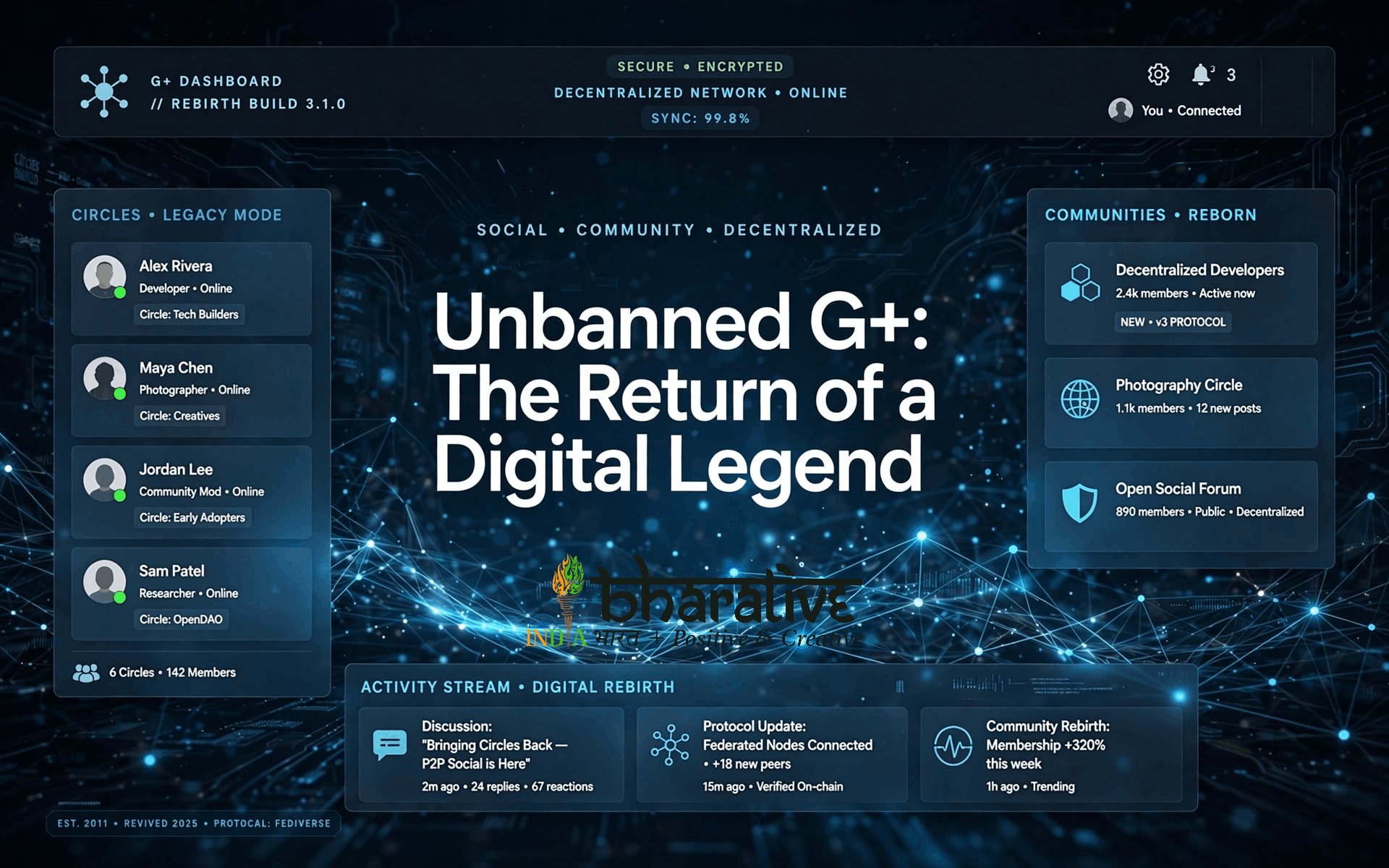
Unbanned G+: The Return of a Digital Legend
Introduction
For longtime internet users, the phrase “unbanned G+” can bring back memories of Google+, the social network Google launched in 2011. The platform introduced features such as Circles, Communities, Hangouts, and personalized content streams before Google eventually discontinued the consumer version in April 2019.
Today, the term unbanned G+ is sometimes used online when people discuss the possibility of bringing back the Google+ experience, recreating its community-focused features, or building modern alternatives inspired by its design.
However, it is important to separate nostalgia and community projects from verified announcements. The original consumer Google+ service has not officially returned, and claims about an official Google revival should be treated carefully unless they come directly from Google.
So, what exactly does “unbanned G+” mean, and why does the idea continue to attract attention?
What Was Google+?
Google+ was Google’s attempt to create a large-scale social networking platform that could compete with Facebook and other established social networks.
Rather than relying only on traditional friend lists, Google+ introduced several distinctive features.
Circles
Circles allowed users to organize contacts into groups such as friends, family, coworkers, or acquaintances. This gave users more control over who could see particular posts.
Communities
Communities allowed people with shared interests to gather around specific topics. Technology, photography, gaming, science, and many other subjects developed active communities during the platform’s lifetime.
Hangouts
Google Hangouts provided messaging, voice, and video communication features and became one of the better-known parts of the Google+ ecosystem.
Streams
The main stream allowed users to discover posts, photos, links, discussions, and other content from people and communities they followed.
These features helped establish Google+ as a platform that emphasized organized communities and interest-based conversations.
Why Was Google+ Shut Down?
Google eventually decided to discontinue Google+ for consumers.
Several factors contributed to the platform’s decline, including relatively low user engagement compared with major competitors and difficulties maintaining a compelling social-networking ecosystem.
Google also disclosed a security issue involving the Google+ API in 2018. The company subsequently announced that the consumer version of Google+ would be shut down.
The consumer service was officially discontinued in April 2019.
That decision effectively ended Google+’s original role as a mainstream social network.
What Does “Unbanned G+” Mean?
The phrase unbanned G+ does not refer to an officially recognized Google product or announced Google service.
Instead, it can be used informally in online discussions to describe several different ideas:
- Interest in bringing Google+ back
- Community projects inspired by Google+
- Attempts to recreate its features
- Archived discussions about the original platform
- Modern decentralized networks with similar concepts
This distinction is important because an unofficial Google+ inspired project should not be confused with an official Google product.
Why Does Google+ Still Have a Following?
Despite its relatively short lifespan, Google+ developed a loyal user base.
One reason was its community structure. Users could participate in discussions based on interests rather than simply following celebrities or collecting followers.
Photography communities, technology groups, open-source discussions, science communities, and creative groups were particularly memorable parts of the platform.
For some former users, Google+ represented a different style of social networking—one that placed more emphasis on shared interests and longer conversations.
Features People Miss About Google+
Interest-Based Communities
Google+ Communities gave users dedicated spaces to discuss specific subjects. This structure remains one of the most frequently remembered aspects of the platform.
Circles and Audience Control
Circles offered a straightforward way to categorize contacts and manage post visibility.
Long-Form Discussions
Google+ supported posts and conversations that could develop into detailed discussions. This made it appealing to users interested in technology, photography, writing, and other specialized subjects.
Multimedia Sharing
The platform supported photographs, links, videos, events, and other forms of content within a unified social environment.
These characteristics helped Google+ develop a distinct identity even though it never achieved the scale Google hoped for.
Could Google+ Actually Return?
There is currently an important distinction between a Google+ revival and a Google+ inspired service.
A true official revival would require Google to announce and operate a new version of the platform. Without an official announcement, claims that Google has secretly relaunched or “unbanned” Google+ should not be presented as established fact.
A more realistic possibility is the development of independent platforms that reproduce some of the ideas that made Google+ attractive.
That could include:
- Community-focused social networks
- Decentralized platforms
- Federated social networks
- Interest-based discussion systems
- User-controlled social feeds
In other words, the ideas behind Google+ can return even if the original platform does not.
Modern Platforms Carrying Similar Ideas
Several modern social platforms demonstrate concepts that resemble parts of the Google+ philosophy.
Federated Social Networks
Federated platforms allow different servers or communities to communicate with one another rather than relying on a single centralized service.
This model can provide greater community independence and user control.
Interest-Based Communities
Platforms focused on specific subjects can recreate the community-driven environment that made Google+ Communities popular.
Decentralized Social Media
Decentralized networks are particularly relevant to discussions surrounding the future of social media because they can reduce dependence on a single corporate platform.
These services are not replacements for Google+ in a literal sense, but they demonstrate that many of its underlying concepts remain relevant.
Why Users Want More Control Over Social Media
The discussion surrounding unbanned G+ also reflects a broader change in how people think about social media.
Users increasingly care about:
- Privacy
- Content ownership
- Feed customization
- Community moderation
- Data portability
- Reduced algorithmic manipulation
The social-media experience has changed considerably since Google+ launched in 2011. Users now expect mobile-first interfaces, instant communication, personalization, strong security, and seamless multimedia support.
Any modern successor would need to address these expectations.
Challenges of Recreating Google+
Rebuilding a platform similar to Google+ would not be simple.
Data and Privacy
A legitimate revival would need to address user data carefully. Old accounts and communities cannot simply be restored without considering privacy and legal requirements.
Intellectual Property
Independent developers recreating the experience would need to avoid improperly copying protected branding, content, or proprietary technology.
User Adoption
A social network needs a large and active community. Even an excellent platform can struggle if users have nobody to interact with.
Modern Competition
Today’s social-media market is far more crowded than it was in 2011. A new platform would have to provide a compelling reason for users to leave established services.
What a Modern G+ Could Look Like
If the core ideas of Google+ were redesigned for today’s internet, the result could look very different from the original platform.
A modern concept might include:
- Chronological feed options for greater user control
- Interest-based communities with advanced moderation
- Portable user identities across compatible services
- Federated infrastructure rather than one centralized network
- Long-form and short-form posts in the same environment
- Better privacy controls for individual posts
- Modern video and messaging features
- Data export and portability
- Powerful community discovery tools
These features would combine the community philosophy of Google+ with expectations created by today’s internet.
Is “Unbanned G+” an Official Google Service?
No verified information should be interpreted as confirmation that the original consumer Google+ service has officially returned under the name unbanned G+.
The phrase is better understood as an informal term used in online discussions about Google+, its legacy, possible alternatives, or community-driven recreations.
Readers should be cautious with websites or social-media posts claiming that Google has officially restored Google+ unless the information can be confirmed through an official Google announcement.
Frequently Asked Questions
What does “unbanned G+” mean?
It is an informal phrase generally associated with discussions about restoring, recreating, or reviving the Google+ experience. It is not the established name of an officially relaunched Google product.
Is Google+ still available?
The original consumer version of Google+ was discontinued by Google in April 2019.
Why do people still talk about Google+?
Many former users remember its Circles, Communities, long-form discussions, and interest-focused social experience.
Can another platform replace Google+?
Modern decentralized and community-focused networks can reproduce some of Google+’s concepts, although they are not the original Google+ service.
Could Google bring Google+ back?
A future Google social product is theoretically possible, but claims about an official Google+ revival should not be treated as fact without confirmation from Google.
Conclusion
The idea of unbanned G+ is as much about the evolution of social media as it is about Google+ itself. The original consumer platform may have disappeared in 2019, but many of its ideas—organized communities, audience control, interest-based conversations, and user-focused social experiences—remain relevant.
Rather than viewing unbanned G+ simply as a claim that Google+ has returned, it is more useful to see it as a conversation about what social networking could become.
The next generation of social platforms may not recreate Google+ exactly. Instead, they may take the best ideas from its past and combine them with decentralized technology, stronger privacy, better customization, and greater user control.
You may also like ...