
She Failed UPSC Thrice and Feared English, But This 24-Year-Old From Rajasthan Still Became an IAS Officer
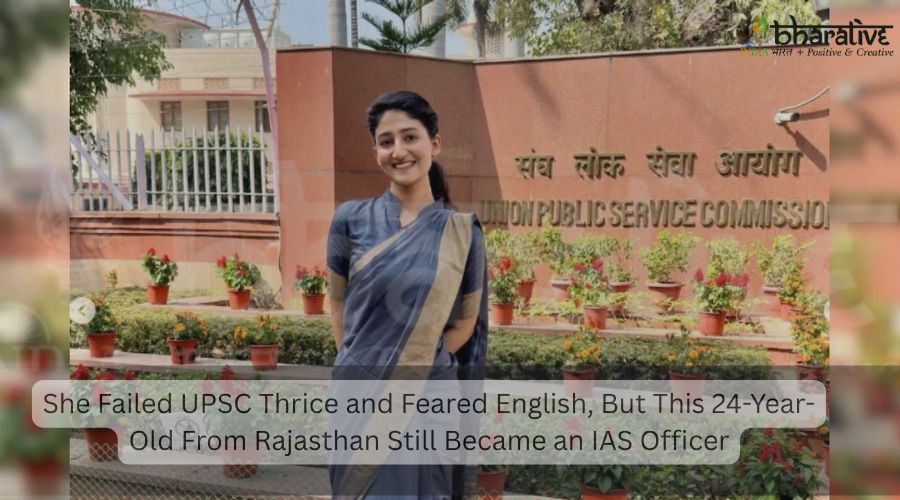
In a country where lakhs of aspirants appear for the UPSC Civil Services Examination every year, only a handful manage to clear it. The journey is long, mentally exhausting, emotionally draining, and often filled with self-doubt. But every once in a while, a story emerges that reminds us why dreams are worth chasing — no matter how many times we fail.
This is the inspiring story of a young woman from Rajasthan who failed UPSC not once, not twice, but three times. She was scared of speaking English, came from a humble background, and often questioned whether she even belonged in the elite world of civil services. Yet, at just 24 years of age, she achieved what millions dream of — becoming an IAS officer.
Her story is not just about success. It is about fear, failure, perseverance, self-belief, and the power of starting again when everything feels lost.
A Small-Town Girl With Big Dreams
Born and raised in a small town of Rajasthan, her childhood was simple. There were no coaching institutes, no English-speaking environment, no exposure to competitive exams. Her parents were supportive but financially limited, like most middle-class Indian families.
From an early age, she was academically bright but extremely shy. English was her biggest fear. She could understand basic words but struggled to speak fluently. In school, she avoided debates, stage performances, and public speaking.
But somewhere deep inside, she carried a powerful dream — to become an IAS officer.
She had seen how government officers could change lives in rural areas. Roads, schools, hospitals — everything depended on good administration. She wanted to be that officer who could make a real difference.
The First UPSC Attempt – A Reality Check
After completing her graduation, she decided to prepare for UPSC. Without much guidance, she moved to a coaching hub and joined a reputed institute.
The initial months were shocking.
Everyone around her spoke fluent English. They quoted international authors. They discussed current affairs confidently. She felt completely out of place.
During mock tests, her scores were terrible. Her English answers lacked clarity. She couldn’t frame proper arguments. Self-doubt slowly started creeping in.
Still, she gave her first UPSC attempt with hope.
Result: Failed in Prelims
She couldn’t even clear the preliminary stage.
That failure broke her confidence completely.
She returned home and seriously considered giving up. Relatives suggested safer options like bank jobs or teaching. Some even mocked her ambition.
But she decided to try once more.
The Second Attempt – Worse Than the First
This time, she studied harder. She joined test series, read newspapers daily, made notes, and followed toppers’ strategies.
But the fear of English never left her. During practice answers, she struggled to express herself. She knew the content but couldn’t write it effectively.
She gave her second attempt with nervous optimism.
Result: Failed Again
Once again, she failed.
This time, it hurt more.
Two years of effort. Two failures.
She started believing she wasn’t meant for UPSC.
The Third Attempt – Mental Breakdown
By the time she started preparing for her third attempt, she was mentally exhausted.
Her friends were getting jobs. Some were getting married. Social pressure was building. Financial burden on family was increasing.
Her English fear had turned into anxiety.
Before interviews or group discussions, she felt physically sick. She avoided speaking. She even hesitated to ask doubts in class.
Still, she pushed herself.
She gave her third attempt.
Result: Failed for the Third Time
Three consecutive failures.
At this point, most people would quit.
She almost did.
She packed her books. She told her parents she would stop. She cried for days.
But something inside her refused to die.
The Turning Point – Rebuilding From Zero
Instead of quitting, she took a bold decision.
She changed everything.
1. Accepted Her Weakness
For the first time, she admitted:
“My biggest problem is not UPSC. My biggest problem is fear.”
Fear of English. Fear of judgment. Fear of failure.
Once she accepted this, things began to change.
2. Learned English Like a Child
She started from scratch.
- Watched English movies with subtitles
- Spoke to herself in English
- Read children’s books
- Recorded her voice and corrected mistakes
- Joined spoken English classes
She stopped feeling ashamed.
She became comfortable with mistakes.
3. Changed Study Strategy
Instead of blindly copying toppers:
- She simplified her notes
- Focused on understanding, not memorizing
- Practiced answer writing daily
- Limited sources
- Revised more than reading new content
4. Improved Mental Health
She started:
- Meditating
- Exercising
- Taking breaks
- Avoiding toxic comparisons
For the first time, she studied with peace, not pressure.
The Fourth Attempt – The Miracle Year
At 24, she appeared for UPSC for the fourth time.
This time, she was different.
She wasn’t scared of English anymore.
She wasn’t obsessed with rank.
She just wanted to give her best.
Prelims: Cleared
Mains: Cleared
Interview: Confident and calm
When the final result came, her name was on the list.
She had become an IAS officer.
How She Cracked the Interview Despite Fear of English
The interview was her biggest fear.
But she did something unique.
She stopped trying to sound perfect.
She spoke slowly. Clearly. Honestly.
When she didn’t know something, she admitted it.
The panel appreciated her authenticity.
They saw not just knowledge, but character.
Lessons From Her Journey
1. Failure Is Not the End
Three failures didn’t define her. They trained her.
2. English Is a Skill, Not Talent
Anyone can learn English. It’s not about background.
3. Consistency Beats Intelligence
She wasn’t the smartest. She was the most persistent.
4. Self-Belief Changes Everything
The moment she believed in herself, results followed.
Advice She Gives to UPSC Aspirants
- Don’t compare your journey
- Accept your weaknesses
- Focus on improvement, not perfection
- Take care of mental health
- Failures are feedback, not verdicts
Why Her Story Matters in India
Her story represents millions of aspirants from:
- Rural backgrounds
- Non-English medium schools
- Financially limited families
- Self-doubt and fear
She proves that:
UPSC is not about privilege. It’s about perseverance.
Final Words
Today, she serves as an IAS officer, working on grassroots issues — education, women empowerment, rural development.
But her biggest achievement isn’t her rank.
It’s the message she sends:
You may also like ...