
Kansas City Elevation Affects Your Weather & Wallet
Key Takeaways
- Kansas City, Missouri sits at roughly 910 feet (277 meters) above sea level.
- The city’s elevation is not uniform because its landscape includes river valleys, hills, plains, and higher areas.
- Terrain and elevation contribute to differences in neighborhood character, scenery, and outdoor experiences.
- Kansas City’s inland location also contributes to noticeable changes in weather and temperature.
- Elevation has influenced development, transportation, architecture, and the character of different parts of the metro area.
- Understanding elevation can help travelers, hikers, designers, and property shoppers better understand Kansas City’s geography.
What Is the Elevation of Kansas City, Missouri?
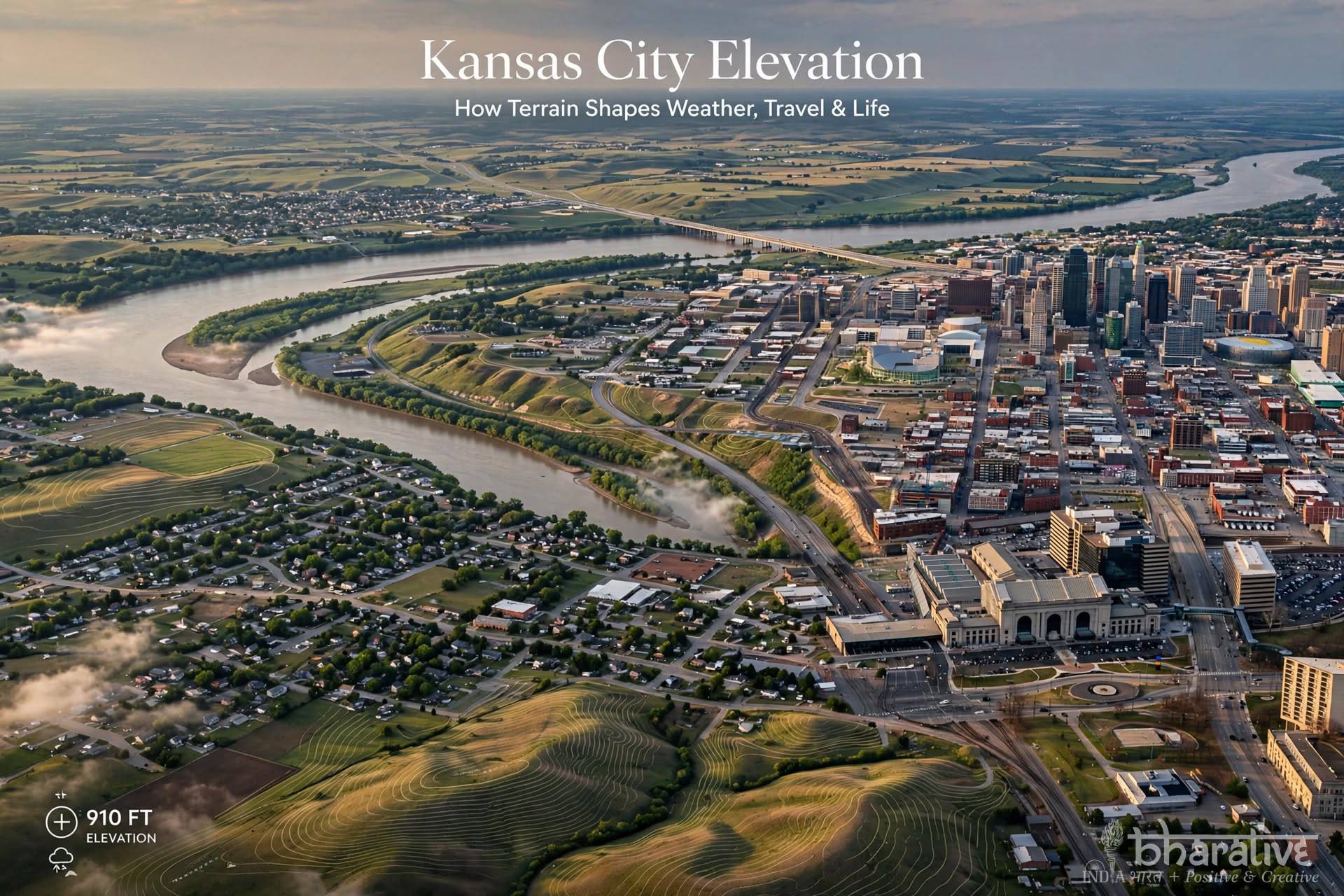
The elevation of Kansas City, Missouri is approximately 910 feet (277 meters) above sea level.
That number, however, doesn’t tell the entire story.
Kansas City stretches across a varied landscape influenced by the Missouri River Valley. As a result, different neighborhoods and surrounding communities can sit at noticeably different elevations.
Some areas are relatively flat, while others feature rolling hills, slopes, bluffs, and elevated viewpoints.
For comparison:
| City | Approx. Elevation |
|---|---|
| Kansas City, MO | 910 ft |
| Denver, CO | 5,280 ft |
| Phoenix, AZ | 1,086 ft |
| Miami, FL | 6 ft |
Kansas City therefore occupies a middle ground compared with these major U.S. cities. It is far below Denver’s famous high-altitude environment while sitting considerably above nearly sea-level Miami.
Why Does Kansas City Have Such a Unique Elevation Profile?
Kansas City’s terrain is closely connected to the region’s geological history.
The Missouri River Valley and long-term erosion helped create a landscape containing different elevations and landforms.
Bluffs
Steeper terrain can be found in areas around the river and other elevated sections of the metropolitan region.
Floodplains
Lower, flatter land near the river provided favorable conditions for transportation, commerce, and development.
Higher Ground
Some surrounding communities and suburban areas occupy higher terrain, creating rolling landscapes and elevated viewpoints.
This variation helps explain why Kansas City can feel surprisingly hilly in some neighborhoods while other parts of the region appear almost completely flat.
The source particularly highlights areas such as North Kansas City, Independence, Overland Park, and Lee’s Summit when discussing these different landscape characteristics.
How Kansas City Elevation Influences Weather and Climate
Elevation is only one part of Kansas City’s weather story, but the city’s geography makes its climate interesting.
Temperature Differences
At approximately 910 feet, Kansas City doesn’t experience the extreme altitude conditions associated with Denver.
The source describes typical summer and winter temperatures as roughly 89°F and 24°F, respectively.
Rapid Weather Changes
Kansas City can experience significant temperature changes over relatively short periods.
Cold Arctic air and warmer air moving north from the Gulf region can contribute to dramatic shifts, producing everything from mild temperatures to winter weather.
Storm Potential
Kansas City’s position in the central United States also places it in a region where severe weather can occur.
The combination of plains, moisture, and changing air masses contributes to the area’s reputation for dramatic storms.
Kansas City Neighborhoods and Elevation
Elevation varies throughout the Kansas City area, which can create noticeable differences in terrain and scenery.
| Neighborhood | ZIP Code | Approx. Elevation | Character |
|---|---|---|---|
| Downtown Kansas City | 64105 | 850 ft | Urban, relatively flat |
| The Plaza | 64112 | 950 ft | Hilly, upscale |
| Overland Park | 66212 | 1,050 ft | Suburban, elevated |
| Independence | 64055 | 800 ft | Historic, sloping |
The source also gives Missouri-side Kansas City ZIP codes as 64101–64199 and Kansas-side codes as 66101–66199.
Because ZIP-code boundaries and elevations are not the same thing, these figures should be treated as general examples rather than exact elevation measurements for every property within a ZIP code.
How Elevation Has Influenced Kansas City’s Development
Kansas City’s terrain has played a role in how different areas developed.
River Trade
Lower areas around the Missouri River supported transportation and commercial activity, helping Kansas City grow as an important regional hub.
Hilly Neighborhoods
Some residential areas developed around rolling terrain, creating winding streets, elevated homes, and distinctive neighborhood character.
Industrial Development
Lower and flatter areas were attractive for transportation infrastructure, rail facilities, industrial uses, and other large-scale development.
Today, the relationship between elevation and development can still be seen across the metropolitan area. Higher locations can provide views, while flatter areas can be advantageous for large buildings, roads, and commercial infrastructure.
Outdoor Adventures and Kansas City’s Changing Terrain
Kansas City’s elevation changes also create opportunities for outdoor recreation.
George Owens Nature Park
The source highlights elevation changes at George Owens Nature Park as an example of terrain that can make a hike more physically demanding.
Lindbergh Park Trails
Rolling terrain can make local trails suitable for recreational cycling and outdoor activities.
Wyandotte County Lake Park
Higher areas and scenic overlooks provide opportunities to experience the region’s changing landscape from elevated viewpoints.
For hikers and cyclists, Kansas City’s terrain can therefore provide more variety than the city’s average elevation number might suggest.
Kansas City Elevation vs. Other Cities
Kansas City’s elevation becomes easier to understand when compared with other major cities.
Kansas City vs. Denver
Denver sits at approximately 5,280 feet, making it dramatically higher than Kansas City.
Visitors accustomed to Kansas City’s elevation may notice the difference when traveling to Denver.
Kansas City vs. Phoenix
Phoenix sits at roughly 1,086 feet, somewhat higher than Kansas City despite being known primarily for its desert climate.
Kansas City vs. Miami
Miami is extremely close to sea level at around 6 feet, making Kansas City’s 910-foot elevation substantially higher by comparison.
The numbers demonstrate why elevation should always be considered in geographic context rather than viewed in isolation.
Frequently Asked Questions
What Is the Highest Elevation Point in Kansas City?
The source identifies an elevation of approximately 1,100 feet around Shawnee Mission Park in Overland Park as a high point in the broader Kansas City area.
Because the Kansas City metropolitan area crosses state and municipal boundaries, the exact answer depends on how “Kansas City” is defined.
How Does Kansas City Elevation Compare With Other Midwest Cities?
The source compares Kansas City at approximately 910 feet with cities such as Minneapolis and St. Louis. It describes Kansas City as occupying a relatively moderate position in terms of elevation.
Can Kansas City, Kansas Elevation Data Be Used for Hiking?
Yes. Elevation and elevation gain can be useful when planning hikes and cycling routes.
Trail applications can provide elevation profiles, helping outdoor enthusiasts understand whether a route is relatively flat or includes significant climbs.
Does Elevation Affect Kansas City Property Values?
Elevation can influence views, terrain, drainage, neighborhood character, and development possibilities.
The source suggests that some higher, scenic neighborhoods can command premiums, although the exact effect on property values depends on many factors beyond elevation alone.
Why Elevation Matters for Travelers
For visitors, Kansas City’s moderate elevation generally means that altitude itself isn’t likely to be the main challenge.
Instead, travelers are more likely to notice:
- Rolling hills in certain neighborhoods
- Different viewpoints and landscapes
- Seasonal weather changes
- Temperature fluctuations
- Outdoor trails with varying elevation gain
Packing for changing weather conditions may therefore be more useful than worrying about altitude sickness.
Why Elevation Matters for Designers and Planners
Kansas City’s varied terrain also provides an interesting case study for anyone interested in architecture, urban planning, or landscape design.
A building or neighborhood located on a hill interacts differently with its surroundings than one built on a flat floodplain.
Elevation can influence:
- Street layouts
- Building foundations
- Views and sightlines
- Drainage considerations
- Transportation routes
- Landscaping
- Neighborhood identity
The result is a city where geography contributes directly to the visual and functional character of different areas.
Practical Tips for Exploring Kansas City
If you’re planning to explore the city and surrounding region:
- Check the terrain before hiking.
Look at elevation gain rather than simply distance. - Prepare for changing weather.
Kansas City’s weather can shift quickly. - Explore both flat and hilly areas.
They offer very different experiences. - Look for elevated viewpoints.
Higher terrain can provide interesting perspectives of the metropolitan landscape. - Use accurate location data.
Elevation can vary considerably even within relatively short distances.
Conclusion
Kansas City elevation is more than a number on a map.
At roughly 910 feet above sea level, Kansas City sits in a moderate elevation range, but its terrain is far from uniform. River valleys, floodplains, hills, bluffs, and elevated suburban areas create a diverse landscape across the metropolitan region.
That geography influences how neighborhoods look, how people experience outdoor recreation, and how the city has developed over time.
Whether you’re planning a visit, researching local real estate, exploring hiking trails, or simply curious about Kansas City’s geography, understanding elevation provides another way to see the city.
Kansas City’s elevation story isn’t about being extremely high or extremely low—it’s about the variety created between the two.
You may also like ...