Epic Fruit of the Loom Cornucopia Debunked: The Truth Behind the Mandela Effect
Key Takeaways
- The official Fruit of the Loom logo is not documented as containing a cornucopia.
- Many people vividly remember a horn-of-plenty behind the fruit, making this a popular example of the Mandela effect.
- Memory can blend harvest imagery, packaging, advertisements, and familiar brand elements into a single reconstructed image.
- Historical logos changed in color, typography, shading, and arrangement, but the documented fruit cluster remained the core design.
- Vintage packaging, trademark records, advertisements, and archival collections can help verify what the logo actually looked like.
- For designers and marketers, the debate demonstrates how context, surrounding imagery, and visual perception can influence brand recognition.
What People Mean by “Cornucopia Fruit of the Loom”
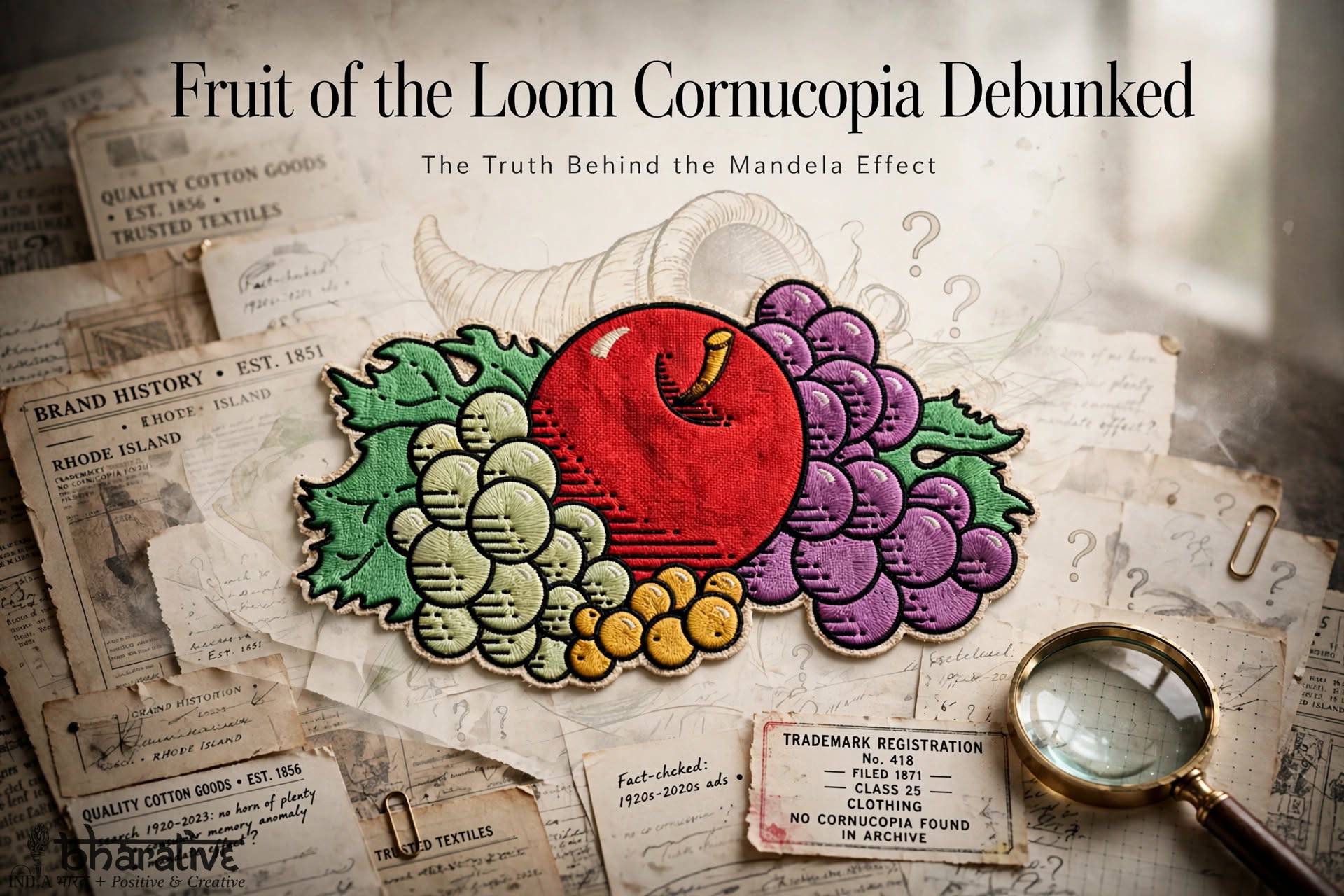
The phrase “cornucopia Fruit of the Loom” refers to a widely shared memory of the Fruit of the Loom logo showing a collection of fruit sitting inside or emerging from a curved woven horn.
The familiar image usually includes grapes, leaves, an apple, and other fruit. The disputed detail is the cornucopia—the traditional horn-shaped container associated with abundance and harvest.
For many people, the memory feels extremely specific. They remember seeing the horn on clothing, packaging, or advertisements and may even feel certain that it was once part of the official logo.
However, a strong memory and a documented historical record are not necessarily the same thing.
Did the Fruit of the Loom Logo Ever Include a Cornucopia?
The short answer is no official Fruit of the Loom logo is documented with a cornucopia according to the source material reviewed for this article.
Historical verification can be approached through several types of evidence:
Trademark Records
Historical trademark databases can be used to examine registered Fruit of the Loom word and design marks. The documented designs include fruit clusters and different wordmark treatments, but the source states that no official mark shows a horn-of-plenty.
Vintage Packaging and Catalogs
Old retail advertisements, catalogs, and packaging provide another useful record. Different versions may have changed in color, shading, arrangement, and layout, but the fruit cluster itself remained without a cornucopia.
Brand Guidelines
Brand documentation can reveal approved colors, spacing, arrangements, and other visual rules. The source notes that modern and historical examples remain horn-free.
Museum and Library Collections
Archived apparel labels, advertising material, and related collections can provide additional evidence of how the brand appeared over time.
The source’s evidence summary makes an important distinction: harvest-themed imagery may have appeared near the branding, but that does not mean the cornucopia was part of the official logo.
Why Do So Many People Remember a Horn?
The explanation becomes more interesting when memory psychology enters the discussion.
Schema Completion
A cornucopia is strongly associated with fruit, abundance, autumn, and Thanksgiving. When people see a familiar fruit arrangement, the brain may automatically connect it with a culturally familiar harvest symbol.
Source Mixing
A person may have encountered a Fruit of the Loom logo alongside seasonal advertisements or harvest artwork. Over time, the distinction between the logo and surrounding imagery can become blurred.
Gist Over Detail
Human memory often preserves the general meaning of an image rather than every individual visual detail.
A combination such as:
fruit + heritage brand + harvest imagery
can eventually become:
fruit + cornucopia logo
Repetition and Social Reinforcement
When people repeatedly hear others claim that they remember the same horn, their own memory can feel even more certain.
The important point is that confidence does not necessarily guarantee historical accuracy.
Visual Similarity
Curved leaves, overlapping fruit, shadows, banners, and other surrounding elements can sometimes create shapes that visually resemble the rim of a container.
These factors can make the cornucopia memory feel remarkably convincing.
A Short History of the Fruit of the Loom Logo
The Fruit of the Loom logo has changed visually over the years, but its central concept has remained a fruit cluster.
Late 19th to Early 20th Century
Early versions used painterly fruit illustrations, organic shapes, and hand-lettered branding.
Mid-Century Refinements
As printing methods developed, the artwork became cleaner and more consistent, with clearer outlines and more controlled placement.
Late 20th Century
The brand adopted stronger colors, clearer highlights, and more refined typography. The fruit imagery became particularly recognizable on clothing and packaging.
2000s–2020s
Digital use encouraged cleaner silhouettes, updated shading, and flexible logo arrangements suitable for product tags, waistbands, packaging, and online stores.
According to the source, these changes affected presentation and styling rather than introducing or removing an official cornucopia.
Old Fruit of the Loom Logo vs. Today’s Design
If you remember an older version of the logo looking different, there are several legitimate reasons for that perception.
Color
Older printed materials often had softer or less saturated colors, while modern digital versions can appear brighter and more precise.
Edge Treatment
Printing techniques affected how outlines and details appeared. Modern digital reproduction generally produces sharper edges.
Typography
The wordmark has undergone changes in spacing, weight, and overall treatment.
Fruit Arrangement
Small adjustments to overlaps, leaf angles, and positioning can change how the entire logo feels without fundamentally changing its recognizable elements.
The consistent elements identified by the source are the apple-and-grapes focal point and surrounding leaves, without a horn in the documented brand mark.
Where the Memory May Have Become Strongest: Fruit of the Loom Packaging
Fruit of the Loom underwear packaging is one of the most likely places where people formed their memories of the brand.
Over several decades, packaging changed in size, color, layout, and photography.
Seasonal Retail Displays
During autumn and Thanksgiving, retailers commonly use harvest-related visual themes. A cornucopia could appear in surrounding promotional artwork even when it wasn’t part of the Fruit of the Loom logo.
Packaging Variations
The fruit cluster could appear above banners, ribbons, or other curved design elements. From a quick glance, these shapes could potentially be interpreted as the rim of a container.
Low-Quality Images
Old packaging photographs and modern marketplace thumbnails may contain compression, folds, shadows, or cropping that visually merge separate elements.
For anyone investigating the memory, high-resolution photographs of sealed vintage packages are more useful than blurry or heavily cropped images.
The Fruit of the Loom Cornucopia and the Mandela Effect
The debate is frequently described as a Mandela effect—a situation where groups of people share a strong memory that conflicts with available historical evidence.
Three ideas help explain the phenomenon:
- Collective schema: Cultural associations such as harvest and cornucopias influence what people expect to see.
- Memory stitching: The brain combines related visual experiences into a coherent story.
- Social proof: Hearing other people describe the same memory can increase confidence in one’s own recollection.
Rather than simply proving that people are careless with facts, the debate illustrates how human memory reconstructs experiences.
How to Verify the Logo Yourself
If you want to settle the Fruit of the Loom cornucopia debate with evidence, use a repeatable research process.
1. Check Trademark Databases
Search historical trademark records for Fruit of the Loom design marks and examine both descriptions and visual representations.
2. Search Vintage Advertisements
Look through old catalogs, department-store advertisements, circulars, and mail-order publications.
Pay particular attention to whether harvest artwork appears next to the logo rather than inside it.
3. Examine Vintage Packaging
Look for unopened or well-preserved vintage Fruit of the Loom packages. High-resolution images are especially valuable.
4. Review Brand Guidelines
Where available, compare official logo files, usage instructions, spacing rules, and approved arrangements.
5. Explore Museum and Library Collections
Apparel and advertising collections can provide physical evidence such as tags, labels, catalogs, and historical promotional material.
Creating a simple timeline with the year, image, source, and observations can make the comparison much easier.
A Real-Life Example of the “I Saw the Horn” Memory
A typical experience described in the source involves someone finding an old Fruit of the Loom package and expecting to see the cornucopia.
Instead, the actual package shows the familiar fruit cluster without the horn.
The person then discovers an old Thanksgiving advertisement where a cornucopia appears close to the brand. The realization is that two separate visual memories may have blended together over time.
The interesting part is that the original memory doesn’t necessarily disappear. Instead, its elements are understood differently once additional evidence is discovered.
Why the Eye Can Read a “Horn” Into the Logo
Visual perception can also contribute to the confusion.
Implied Rim
A curved leaf combined with grape outlines can create a crescent-like shape that resembles the edge of a container.
Figure-Ground Confusion
Dark backgrounds and overlapping objects can make negative space appear to form another object.
Curved Labels and Frames
Banners, badges, and curved packaging elements can resemble the opening of a cornucopia when viewed in a small or cropped image.
These visual effects demonstrate how a brief glance can become a surprisingly durable memory.
What Collectors Look for in the Old Fruit of the Loom Logo
Collectors examining vintage Fruit of the Loom products can identify different eras through visual characteristics.
- Early painterly fruit: Softer shadows, organic shapes, and hand-lettered branding.
- Mid-century simplification: Cleaner outlines and flatter color areas.
- Late-20th-century depth: Stronger highlights, richer colors, and refined typography.
- 2000s digital polish: Smoother gradients, standardized colors, and cleaner details.
A supposed vintage logo showing a cornucopia should therefore be examined carefully. It may be fan art, parody artwork, a manipulated image, or an incorrectly cropped example rather than an authentic historical logo.
Counterfeits, Fan Art, and AI-Generated Images
Not every unusual Fruit of the Loom image circulating online is historical evidence.
Counterfeit Packaging
Fake products can contain incorrect colors, typography, fruit arrangements, or invented visual elements.
Fan Edits and Mockups
Designers sometimes create imagined versions of familiar logos for jokes, portfolios, or creative experiments.
AI-Generated Images
Modern image-generation tools can easily combine concepts such as “Fruit of the Loom” and “cornucopia.” A viral image without a traceable source should therefore be treated as artwork rather than proof.
A useful rule is simple:
If an image cannot be traced to a physical product or credible archive, it should not be used as evidence of brand history.
Why the Myth Continues
The cornucopia story remains popular for several reasons.
It’s Fun
The idea that thousands of people may remember something incorrectly makes for an entertaining conversation.
The Brand Is Familiar
Fruit of the Loom products have been part of everyday life for generations, giving the logo a huge number of associated memories.
The Horn Makes Thematic Sense
A cornucopia naturally represents abundance and harvest. Because the symbol fits the fruit imagery so well, it is easy for the brain to accept it as part of the original design.
Instead of dismissing people who remember the horn, the better approach is to invite them to investigate the evidence.
What This Teaches Designers and Marketers
The debate is more than an internet curiosity. It provides useful lessons for branding.
For Designers
A logo does not exist in isolation. Surrounding graphics, shadows, packaging elements, and seasonal imagery can influence how viewers perceive it.
Designers should test logos at different sizes and in different environments.
For Marketers
Customer memory may not perfectly match the official brand guidelines. Clear packaging, accurate visuals, and consistent communication can help reduce confusion.
For Teachers
The example can be used to explain memory reconstruction, schema theory, source-monitoring errors, and the Mandela effect.
The source even suggests comparing packaging layouts with and without harvest imagery to see how surrounding context affects recall.
Ethical Guidelines for Covering the Debate
Content creators can easily turn the mystery into clickbait. A more responsible approach is to:
- Clearly label fan art, mockups, and AI-generated images.
- Avoid thumbnails that falsely present a horned logo as historical proof.
- Show evidence such as trademark records and archival packaging.
- Avoid creating commercial products that falsely suggest an altered logo was official.
- Keep the discussion respectful toward people whose memories differ from the documented record.
Accuracy builds trust, especially when the subject itself is about misinformation and memory.
A Research Workflow You Can Reuse
The Fruit of the Loom debate offers a useful research model for investigating other brand myths.
- Define the claim clearly.
Example: “The Fruit of the Loom logo once included a cornucopia.” - Identify the evidence needed.
Consider trademarks, packaging, advertisements, and brand guidelines. - Find multiple sources.
Compare official records with independent archives. - Build a timeline.
Record dates, images, and where each example was found. - Save the evidence.
Screenshots, scans, and source links can make future verification much easier.
This approach turns an online argument into a structured research exercise.
FAQs
Did Fruit of the Loom ever have a cornucopia in its logo?
The source states that no official design marks or brand guidelines document a cornucopia as part of the Fruit of the Loom logo. The documented logo is a fruit cluster without the horn.
Why do people remember a cornucopia?
The source attributes the memory to factors such as schema completion and source mixing. Harvest imagery appearing around the brand may have become blended with the logo in people’s memories.
When did Fruit of the Loom change its logo?
The brand changed typography, colors, shading, and composition over time. These changes can make older versions feel substantially different from today’s design, but the source does not identify the addition or removal of a cornucopia.
Is the Fruit of the Loom cornucopia debate a Mandela effect?
Yes. It is commonly discussed as an example of the Mandela effect because many people report a similar memory that conflicts with the documented record.
How can I verify old Fruit of the Loom packaging?
Look for sealed vintage packages, museum collections, library archives, and high-resolution photographs. Compare those examples with historical trademark records rather than relying on reposted social-media images.
Did the old Fruit of the Loom logo look different across products?
The core fruit imagery remained recognizable, while layouts, wordmark placement, lighting, printing quality, and backgrounds could vary across tags, waistbands, and packaging.
What does the Fruit of the Loom logo represent?
The source describes the fruit imagery as communicating abundance, quality, heritage, and reliability through elements such as apples, grapes, and leaves.
Can a cornucopia be used in a parody?
Parody depends on context. The source recommends avoiding confusingly similar commercial uses of the official mark and exercising care when using trademarks for commentary or educational purposes.
For Collectors and Pop-Culture Fans
Anyone interested in the history of the brand can build a small digital archive containing:
- Vintage tags and labels
- High-resolution catalog and flyer scans
- Packaging variations
- Dates and source information
- Notes about colors, fonts, and logo placement
- Observations about how the logo looks at different sizes
Over time, this kind of archive can become a useful visual record of brand evolution.
Practical Lessons for Designers
The debate offers several valuable branding lessons:
- Context changes perception.
- Logos should be tested at thumbnail and shelf distance.
- Surrounding seasonal artwork can influence interpretation.
- Clear “do” and “don’t” brand guidelines can reduce confusion.
- Designers should consider how a logo behaves when surrounded by unrelated visual elements.
A logo may be technically correct while still being visually interpreted in unexpected ways.
Myth vs. Evidence
| Myth | Evidence-Based View |
|---|---|
| The horn was secretly removed in the 1990s. | The source reports no registered mark containing a horn to remove. |
| Old family packaging proves the horn existed. | Shadows, angles, folds, and surrounding artwork can create misleading contours. |
| A recent image proves the logo had a horn. | Fan art, counterfeit products, and AI-generated images can circulate without historical provenance. |
Final Thoughts
The Fruit of the Loom cornucopia debate is fascinating because the memory can feel so real.
Millions of people may picture a woven horn behind the familiar fruit, yet the documented history presented in the source points to a different conclusion: the official logo is a fruit cluster without a cornucopia.
The mystery ultimately says as much about human memory and visual perception as it does about branding.
When a memory feels certain, the best response isn’t necessarily to argue. Check the records, compare the evidence, and let the facts tell the story.
Bottom Line
The cornucopia may be missing from the official Fruit of the Loom logo, but it remains firmly present in popular memory.
That makes this one of the most interesting examples of how cultural associations, visual context, repeated conversations, and reconstructed memories can combine into a convincing version of the past.
You may also like ...