Recent Innovative Marketing Campaigns 2025: Big Ideas That Changed the Game
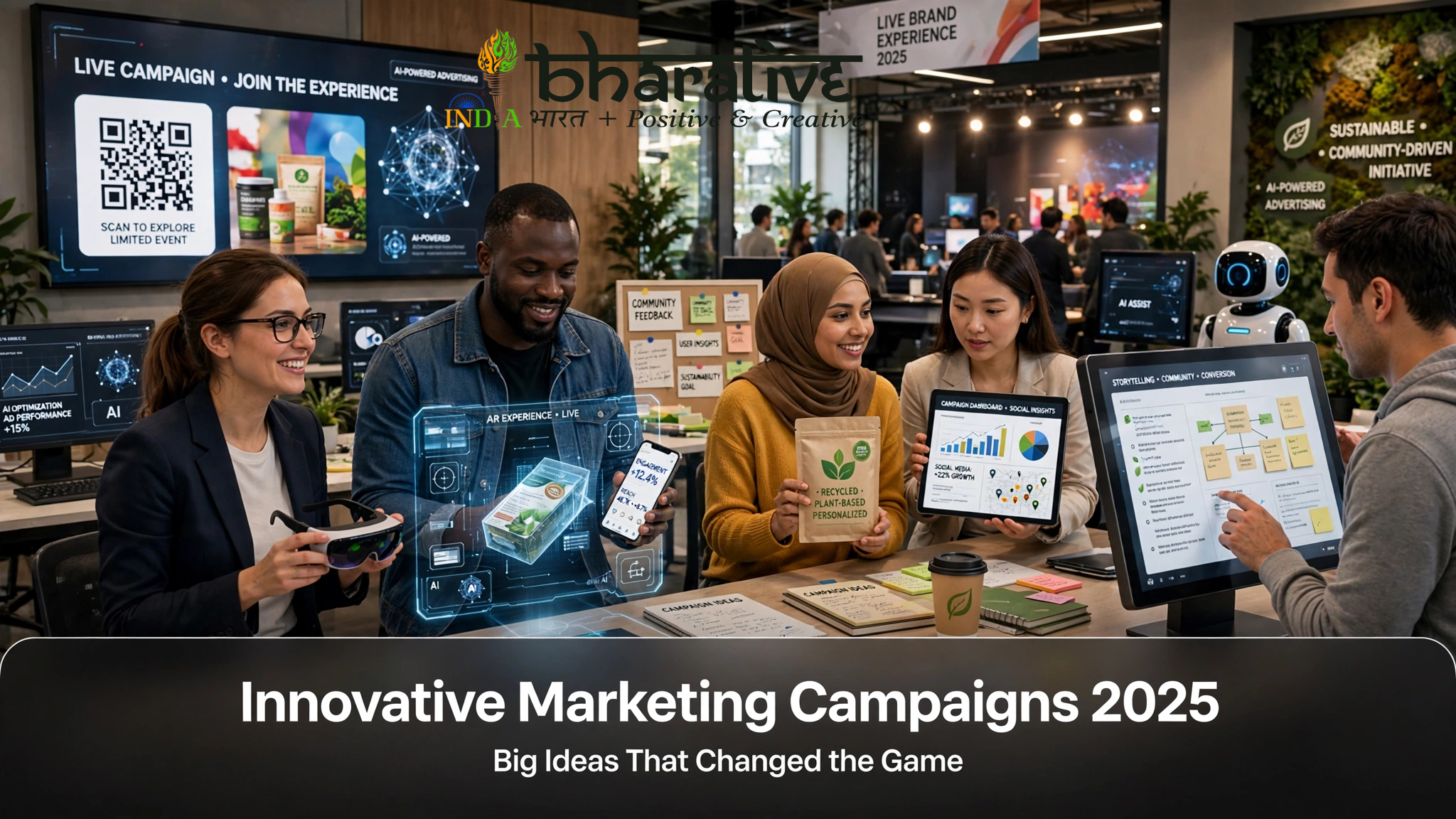
Marketing in 2025 has moved far beyond traditional advertising. The strongest campaigns are no longer focused only on selling products. Instead, brands are creating experiences that people can participate in, remember, and share.
When exploring recent innovative marketing examples campaigns 2025, several clear trends stand out: artificial intelligence, augmented reality, personalization, community participation, sustainability, and real-time engagement. Brands are finding new ways to connect with consumers by turning ordinary advertising into something interactive and meaningful.
This article explores some of the campaign concepts and marketing approaches that illustrate how creative thinking is reshaping modern brand communication.
Why Innovative Marketing Became So Important in 2025
Consumer attention is increasingly difficult to capture. People scroll past conventional advertisements quickly, while authentic and interactive experiences are more likely to generate engagement.
Successful campaigns in 2025 generally focused on:
- Human connection instead of aggressive selling
- Interactive experiences rather than passive advertising
- Technology that improves the customer experience
- Community participation and user-generated content
- Purpose-driven storytelling
- Personalization at scale
The result is a marketing environment where creativity and customer involvement can be just as important as advertising budgets.
AI-Powered Personalization and Storytelling
Artificial intelligence has become one of the most influential marketing technologies. Rather than simply using AI to automate advertising, innovative campaigns are using it to create personalized experiences.
One powerful concept is personalized packaging. A customer can provide a memory, message, photograph, or short story through a digital platform, after which AI transforms the information into customized content.
This approach can make an ordinary product feel personal.
Why This Approach Works
- Customers become part of the campaign
- Personalized content encourages social sharing
- Products can become memorable keepsakes
- AI makes large-scale customization possible
The lesson for marketers is straightforward: personalization becomes more powerful when it creates an emotional connection rather than simply inserting someone’s name into an advertisement.
Nike and the Growth of Virtual Fitness Experiences
Fitness marketing is also becoming increasingly interactive. Instead of simply showing athletes using products, brands can build digital experiences that allow customers to participate.
A virtual marathon, for example, can connect runners from different cities through a mobile application. Participants could receive digital milestones, personalized challenges, virtual celebrations, and real-time rankings.
Potential features include:
- Global leaderboards
- Personalized progress tracking
- Augmented reality checkpoints
- Digital finish-line experiences
- Smartwatch and fitness-device integration
This type of campaign demonstrates how a product category can become an experience. Running shoes are no longer simply the product being promoted; the entire running journey becomes part of the marketing story.
Spotify and Hyperlocal Marketing
Music platforms have an enormous amount of location-based listening data. Turning that information into a public experience can create highly shareable campaigns.
A concept such as “Soundtrack of Your Street” could showcase the most popular songs or musical trends in individual neighborhoods.
Digital displays could invite people to scan a QR code and explore a local playlist.
The campaign could also include:
- Neighborhood playlist competitions
- Local artist appearances
- Interactive digital maps
- Community voting
- Social media sharing
This illustrates the value of hyperlocal marketing. Instead of speaking to an entire country with one message, brands can make people feel that the campaign was created specifically for their community.
IKEA and Sustainability Through Participation
Sustainability marketing is more effective when consumers are invited to participate instead of simply being told that a company cares about the environment.
A furniture-reuse campaign could encourage customers to transform old IKEA products instead of discarding them. Participants could upload before-and-after photographs and share their creative projects online.
This approach combines several marketing benefits:
- Sustainability messaging
- User-generated content
- Community participation
- Product creativity
- Brand engagement
The important takeaway is that sustainability can become more compelling when customers are given something practical to do.
Apple and Creator-Focused Campaigns
Apple has historically used creativity as a central part of its marketing identity. A global short-film challenge built around smartphone filmmaking would fit naturally into that strategy.
Creators could be given a limited period to produce a short film using a smartphone. Selected entries could then receive professional support and be presented through a digital premiere.
The concept could include:
- Global creator participation
- Time-limited filmmaking challenges
- Audience voting
- Professional mentorship
- Online premieres
Instead of explaining camera specifications through a traditional advertisement, this type of campaign demonstrates what consumers can actually create with the product.
McDonald’s and Gamified Live Marketing
Food brands can transform ordinary purchases into events by combining social media clues, limited releases, and physical pop-ups.
A surprise midnight campaign could reveal participating locations through clues posted on social media. Customers who solve the clues could receive limited-edition menu items or merchandise.
The strategy combines:
- Gamification
- Limited availability
- Social media engagement
- Real-world experiences
- Exclusive rewards
Scarcity and participation can create excitement without requiring a traditional advertising format.
Customer-Led Product Reveals
Consumers increasingly trust other consumers. This has created opportunities for brands to make customers part of major product announcements.
Instead of relying entirely on celebrities or professional presenters, companies can invite existing customers to participate in product reveals, demonstrations, or livestreams.
This strategy can make a campaign feel more authentic because the audience sees real people using and discussing the product.
The broader lesson is important: customers can become powerful brand storytellers when companies give them a meaningful role.
Dove and Authenticity in the Age of AI
As AI-generated images and digital beauty filters become increasingly common, authenticity has become an important marketing theme.
A campaign focused on revealing natural appearances rather than enhancing them can challenge unrealistic digital beauty standards.
Such a campaign can encourage conversations around:
- Authentic self-expression
- Digital manipulation
- Beauty standards
- Social media pressure
- Confidence and individuality
The marketing opportunity here is not simply to criticize technology. Instead, brands can position themselves around responsible and authentic use of technology.
LEGO and Mixed-Reality Experiences
Mixed reality provides another opportunity for brands to connect physical products with digital storytelling.
Imagine children building physical LEGO structures while digital projections transform their creations into animated cities. Their physical construction becomes part of a larger interactive experience.
Such a campaign can combine:
- Physical products
- Augmented reality
- Digital storytelling
- Interactive displays
- Family participation
The strongest aspect of this approach is that technology supports creativity rather than replacing it.
What These Innovative Campaigns Have in Common
Although the campaigns discussed above use different technologies and industries, they share several important characteristics.
1. Participation Instead of Passive Advertising
Modern consumers want to interact with brands. Campaigns that allow people to create, vote, compete, customize, or explore can generate stronger engagement.
2. Technology With a Clear Purpose
AI, AR, apps, QR codes, and data analytics are valuable only when they improve the experience. Technology should support the campaign idea rather than become the idea itself.
3. Strong Emotional Connections
People remember stories and experiences more easily than product specifications. Successful campaigns create emotions such as excitement, nostalgia, curiosity, belonging, or inspiration.
4. Community Participation
Customers can become part of the marketing process through challenges, reviews, social posts, events, and collaborative content.
5. Shareability
The best campaigns give people a reason to talk about them. A memorable experience can naturally generate organic social media content.
What Small Businesses Can Learn From 2025 Marketing Trends
Innovative marketing does not necessarily require a global advertising budget.
Small businesses can apply the same principles on a smaller scale.
For example, a local restaurant could create a customer-voted limited-time menu item. A clothing company could invite customers to customize products. A fitness studio could organize a community challenge with digital rankings.
Businesses can focus on:
- Customer stories
- Local experiences
- Interactive social media campaigns
- Personalized offers
- User-generated content
- Community events
The underlying principle is creativity, not budget size.
The Growing Role of AI in Marketing
AI is likely to remain a major part of marketing because it allows brands to analyze large amounts of information and personalize customer experiences.
However, marketers should avoid using AI simply because it is fashionable.
The strongest applications are likely to be those that help businesses:
- Understand customer preferences
- Generate personalized experiences
- Improve campaign testing
- Analyze audience behavior
- Automate repetitive tasks
- Create content variations
Human creativity remains essential. AI can accelerate execution, but the central campaign idea still needs to resonate with people.
Why Experiential Marketing Is Becoming More Powerful
Traditional advertising asks customers to watch.
Experiential marketing asks customers to participate.
That distinction matters.
A person who watches an advertisement may forget it within minutes. Someone who attends a pop-up event, participates in a challenge, creates personalized content, or wins a competition has a personal memory connected to the brand.
That memory can strengthen brand recognition and encourage organic sharing.
The Future of Innovative Marketing
Looking ahead, marketing is likely to become even more personalized, interactive, and community-driven.
Emerging strategies may combine:
- Artificial intelligence
- Augmented and mixed reality
- Real-time personalization
- Creator partnerships
- Interactive commerce
- Virtual communities
- Sustainable experiences
- Location-based campaigns
The challenge for marketers will be maintaining authenticity while using increasingly sophisticated technology.
Consumers can recognize when an experience feels artificial or overly promotional. Brands that combine technology with genuine human storytelling are more likely to stand out.
Final Thoughts
The recent innovative marketing examples campaigns 2025 demonstrate a major shift in how brands communicate with consumers. Advertising is becoming less about broadcasting a message and more about creating something people can experience.
AI can personalize stories. AR can connect digital and physical environments. Community campaigns can turn customers into participants. Sustainability can become an interactive activity rather than a corporate statement.
The biggest lesson is simple: innovation is not about using the newest technology. It is about finding a better way to make people care.
Brands that understand this principle can create campaigns that do more than generate impressions. They can create conversations, memories, communities, and lasting relationships.
You may also like ...