
The Three-Week Rule in Marriage: Why Bedroom Changes Rarely Last
What’s the Three-Week Rule in Marriage?
Let’s talk about something uncomfortable but painfully common.
You have “the talk.”
The one about intimacy.
The one about feeling unwanted.
The one that starts with, “We need to talk…”
If you’ve had it more than once, you might already understand what the “three-week rule” is — even if you’ve never heard the term before.
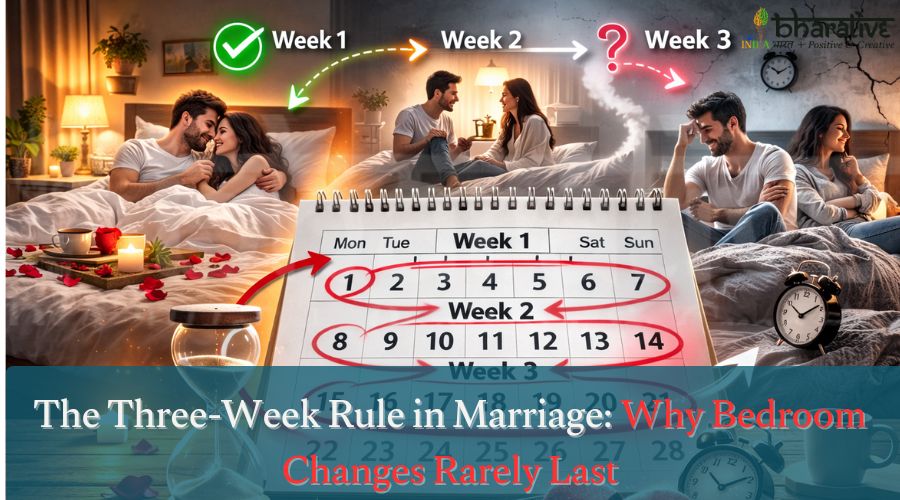
The three-week rule is simple:
Changes in intimacy often last about three weeks… and then everything quietly returns to the way it was.
No explosion.
No big argument.
Just a slow fade back to nothing.
If that sounds familiar, you’re not alone.
What Is the Three-Week Rule?
The “three-week rule” refers to a pattern many couples experience in struggling marriages — especially in what people call a dead bedroom.
Here’s how it usually plays out:
- One partner feels frustrated about the lack of intimacy.
- A serious conversation happens.
- The other partner agrees to “try harder.”
- For a few weeks, there’s improvement.
- Then… it fades.
Back to distance.
Back to excuses.
Back to silence.
The effort wasn’t fake. But it also wasn’t sustainable.
And that’s where the real issue lies.
The Hope Phase: When It Feels Like Things Might Change
After hours of emotional conversations, you finally feel heard.
You say:
- “I need more closeness.”
- “I feel rejected.”
- “I don’t feel desired.”
Your spouse says:
- “I didn’t realize it was that bad.”
- “I’ll try.”
- “We can do it if you want.”
There may even be a few genuinely good nights.
You feel hopeful. Relieved.
You think:
- “They get it now.”
- “We turned a corner.”
- “Maybe we’re going to be okay.”
For a brief window, things improve.
But here’s the hard truth: effort motivated by guilt or pressure rarely lasts.
Why the Three-Week Rule Happens
Let’s break it down.
1. Change Motivated by Pressure Is Temporary
When someone changes because they feel pushed — not because they want to — it usually fades.
They’re not internally motivated.
They’re reacting.
It’s like someone going to the gym because their partner complained about their weight. They might show up for a few weeks. But if the desire isn’t personal, consistency dies quickly.
Intimacy works the same way.
2. Duty Is Not Desire
If intimacy feels like an obligation, it creates resentment.
Statements like:
- “We can if you want.”
- “Hopefully this makes you happy.”
- “I’m trying.”
… don’t sound like passion.
They sound like negotiation.
And over time, duty-based intimacy becomes emotionally draining for both people.
3. Libido Mismatch Is Real
Some couples simply have different baseline needs.
One partner may crave frequent physical connection.
The other may not prioritize it at all.
Neither is “wrong.”
But the gap creates tension.
And no amount of “talking it out” can magically equalize desire.
The Emotional Loop of a Dead Bedroom
Here’s the cycle many couples fall into:
- Frustration builds.
- The high-desire partner initiates a conversation.
- The low-desire partner feels pressure or guilt.
- Temporary effort follows.
- Effort fades.
- Resentment deepens.
- Repeat.
Over time, something worse than rejection happens.
Hopelessness.
Eventually, the high-desire partner stops initiating conversations. Stops asking. Stops hoping.
Not because they don’t care.
Because they’re exhausted.
The Uncomfortable Truth: You Can’t Talk Someone Into Wanting You
Communication is important. It is.
But desire isn’t built through negotiation.
You can’t logic someone into craving you.
You can’t schedule passion.
And you can’t guilt someone into sustainable attraction.
Real change happens when a person:
- Reflects internally.
- Recognizes their own dissatisfaction.
- Decides they want something different.
Without that internal shift, any change is likely temporary.
Often… about three weeks temporary.
The Fairness Dilemma
Here’s where it gets complicated.
It’s not fair for your needs to go unmet indefinitely.
But it’s also not fair for someone to feel obligated to provide intimacy they don’t genuinely want.
That tension creates a painful stalemate.
You’re left with difficult options:
- Stay and suppress your needs.
- Keep repeating the same conversation.
- Seek fulfillment elsewhere.
- End the relationship.
None of these choices feel good.
And that’s why the three-week rule feels so brutal — it teases hope before pulling it away.
When Needs Diverge in Long-Term Marriage
Over time, people change.
Hormones change.
Stress levels change.
Health changes.
Interests change.
Sometimes two people evolve in different directions.
A relationship that once felt aligned may start feeling mismatched.
And here’s the hard part:
Love does not automatically equal compatibility.
You can care deeply about someone and still feel unfulfilled.
That doesn’t make you selfish.
It makes you human.
The “Lightbulb” Moment Many People Have
For some, there comes a moment of clarity.
Not anger.
Not drama.
Just realization.
You understand:
- You can’t force someone to want what they don’t want.
- You can’t beg for sustainable desire.
- You can’t negotiate chemistry.
That realization can lead to different decisions for different people.
Some double down on therapy and deeper emotional work.
Some redefine what intimacy means in their marriage.
Some choose separation.
Some emotionally detach.
There’s no universal right answer.
But there is one consistent truth:
Sustainable change has to be internally driven.
Is the Three-Week Rule Always Inevitable?
Not necessarily.
But breaking the cycle requires more than another “talk.”
It requires:
1. Honest Self-Reflection From Both Partners
Why is intimacy low?
Is it stress? Hormones? Emotional disconnect? Resentment?
2. Professional Support
Sometimes couples therapy or sex therapy helps uncover root causes that surface-level conversations miss.
3. Removing Pressure
Ironically, constant pressure often makes desire shrink further.
4. Shared Ownership of the Problem
If only one partner sees the issue, lasting change is unlikely.
Both people have to care.
When Talking Isn’t Enough
Many couples believe communication solves everything.
Communication helps with logistics.
But desire lives deeper than conversation.
It’s influenced by:
- Emotional safety
- Self-image
- Attraction
- Stress
- Health
- Power dynamics
- Unresolved resentment
If those aren’t addressed, no number of late-night heart-to-hearts will fix the pattern.
And that’s where people begin to feel stuck.
The Emotional Cost of Repeated Disappointment
The three-week cycle doesn’t just affect your physical life.
It affects your mental state.
You may start to feel:
- Unwanted
- Unattractive
- Invisible
- Angry
- Resentful
Repeated hope followed by repeated disappointment hurts more than constant rejection.
Because hope builds emotional investment.
When it collapses, something inside you hardens.
So What Do You Do?
There’s no neat answer.
But here are healthier starting points than endless repetition:
✔ Stop Having the Same Conversation the Same Way
If it didn’t work the first five times, repeating it won’t magically fix it.
✔ Ask Deeper Questions
Is intimacy the issue — or is it a symptom of something else?
✔ Work on Yourself
Not in a performative way. But in a grounded way.
Confidence and fulfillment can’t depend entirely on a partner.
✔ Be Honest About Your Dealbreakers
Everyone has limits. Pretending you don’t only delays pain.
The Reality of the Three-Week Rule
The three-week rule isn’t about pessimism.
It’s about patterns.
When change is externally motivated, it fades.
When desire isn’t internally reignited, it dwindles.
When mismatches aren’t addressed at their root, surface improvements collapse.
Recognizing the pattern doesn’t make you negative.
It makes you aware.
And awareness gives you power to decide what you’re willing to accept — and what you’re not.
Final Thoughts
If you see yourself in this cycle, you’re not broken.
You’re not unreasonable for wanting intimacy.
And your partner isn’t automatically the villain for not wanting the same frequency.
But pretending temporary effort equals lasting change only prolongs frustration.
The real question isn’t whether the three-week rule exists.
The real question is:
Are both people willing to make deep, internal changes — not just short-term adjustments?
Because without that…
Three weeks will pass quickly.

You may also like ...