
Neera Arya: India’s First Woman Spy of the INA – A Forgotten Heroine’s Story
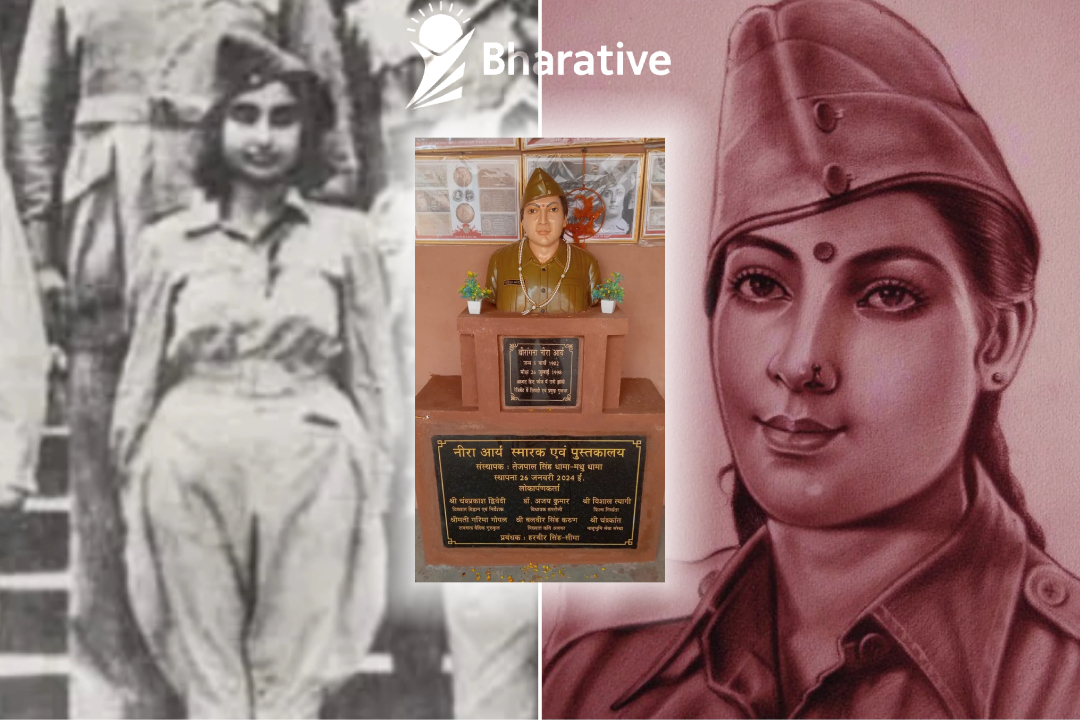
Who Is Neera Arya, INA’s First Woman Spy Whose Bravery Inspired a Biopic
India’s freedom struggle is filled with stories of extraordinary courage, sacrifice, and resilience. While many male leaders and revolutionaries are widely remembered, the contributions of countless women remain underrepresented or forgotten altogether. Among these lesser-known heroes stands Neera Arya, a woman whose life reads like a gripping historical thriller—marked by patriotism, espionage, moral conflict, imprisonment, and silent suffering.
Recognized as the first woman spy of the Indian National Army (INA), Neera Arya’s story is one of fierce loyalty to the nation at a time when betrayal, fear, and repression were everyday realities. Her bravery, long buried in the margins of history, has recently returned to public attention with the announcement of a biopic that seeks to bring her legacy to the forefront.
This article presents a detailed, carefully structured, and comprehensive account of Neera Arya’s life—from her early years and involvement in the INA to her controversial personal choices, brutal imprisonment, and eventual obscurity after independence. It also explores why her story remained largely unknown for decades and why it matters deeply today.
Early Life and Background of Neera Arya
Birth and Family Roots
Neera Arya was born on 5 March 1902 in Khekra Nagar, located in the present-day Baghpat district of Uttar Pradesh. She was born into a well-to-do family associated with the Arya Samaj, a reformist Hindu movement that emphasized education, social reform, and nationalism. Her father, Seth Chhajjumal, ensured that Neera received a good education at a time when educating girls was still uncommon in many parts of India.
Growing up in a household that valued learning and moral discipline played a crucial role in shaping Neera’s worldview. The Arya Samaj’s emphasis on national pride, self-respect, and resistance to colonial dominance left a deep impression on her from an early age.
Education and Early Influences
Neera Arya received her early education locally before moving to Kolkata for higher studies, where she lived with her brother. Kolkata, during the early 20th century, was a hotbed of revolutionary activity and nationalist discourse. The city exposed Neera to political debates, freedom movements, and underground resistance networks that were actively challenging British rule.
This exposure sharpened her political consciousness. Unlike many women of her generation who were expected to confine themselves to domestic roles, Neera developed a strong sense of national duty and an emotional connection to the idea of a free India.
Marriage and the Clash of Ideologies
Marriage to a British Officer
In a twist that would later define her life, Neera Arya was married to Srikant Jai Ranjan Das, an officer associated with the British Indian Army and believed to have worked with the Criminal Investigation Department (CID). The marriage was arranged, as was customary at the time, and initially appeared to be socially advantageous.
However, this union soon became a battlefield of ideologies. While Neera’s heart belonged to India’s freedom movement, her husband remained loyal to the British colonial administration. The ideological divide between them was not merely political—it was existential.
A Household Divided by Loyalty
Living with a British officer placed Neera in a morally complex and dangerous position. On one hand, she was expected to play the role of a dutiful wife; on the other, she was increasingly drawn toward active participation in the freedom struggle.
This internal conflict intensified as British surveillance and intelligence operations increased. Neera’s proximity to colonial power structures ironically became both a liability and an opportunity—one that would later define her role as a spy.
The Indian National Army and the Rani of Jhansi Regiment
Formation of the INA
The Indian National Army (INA) was formed to fight British rule in India with the support of Axis powers during World War II. Under the leadership of Netaji Subhas Chandra Bose, the INA sought to mobilize Indians living abroad and Indian prisoners of war to wage an armed struggle against colonial domination.
One of Netaji’s most revolutionary steps was the formation of the Rani of Jhansi Regiment, an all-women combat unit named after the iconic freedom fighter Rani Lakshmibai.
Neera Arya Joins the INA
Inspired by Netaji’s vision and call for complete independence, Neera Arya joined the Rani of Jhansi Regiment. Her intelligence, courage, and ability to navigate complex social environments quickly set her apart.
Recognizing her unique position and capabilities, INA leadership entrusted Neera with responsibilities beyond conventional combat roles. She was inducted into the intelligence wing of the INA, where she began working as an operative gathering sensitive information.
Neera Arya as a Spy
Role in Intelligence Operations
As an intelligence operative, Neera Arya’s duties involved gathering strategic information, identifying British movements, and maintaining secrecy under extreme risk. Her background as the wife of a British officer allowed her access to information that few Indian revolutionaries could obtain.
Operating in disguise, she reportedly passed on critical intelligence to the INA, helping Netaji’s forces plan operations and evade British surveillance.
Recognition as INA’s First Woman Spy
Netaji Subhas Chandra Bose is believed to have recognized Neera Arya’s contributions by acknowledging her as the first woman spy of the Indian National Army. This recognition placed her in a unique position in the history of India’s freedom struggle.
Her work as a spy was not glamorous. It required silence, isolation, and constant fear of exposure. Yet Neera continued, fully aware that discovery could mean imprisonment—or worse.
The Defining Moment: Choosing Country Over Family
The Alleged Plot Against Netaji
According to several historical accounts, Neera Arya’s husband, Srikant Jai Ranjan Das, became suspicious of her activities and later discovered her involvement with the INA. It is said that he attempted to use her position to gather intelligence about Netaji Subhas Chandra Bose.
Some narratives claim that her husband even participated in a plan to assassinate Netaji, injuring his driver in the process. This marked a turning point in Neera’s life.
A Decision That Changed Everything
Faced with the possibility of Netaji’s assassination and the collapse of crucial INA operations, Neera Arya made an unthinkable decision. To protect the leader she believed in and the cause she served, she reportedly killed her husband.
This act was not one of vengeance, but of sacrifice. It was a moment where personal bonds were severed in the name of national loyalty. Few decisions in the freedom struggle were as morally complex or emotionally devastating.
Arrest and Imprisonment
Captured by the British
Following her husband’s death, Neera Arya was arrested by British authorities. Her involvement with the INA and the killing of a British officer made her a high-value prisoner.
She was interrogated extensively and pressured to reveal information about INA networks, Netaji’s whereabouts, and other operatives.
Cellular Jail, Andaman and Nicobar Islands
Neera Arya was eventually sent to the infamous Cellular Jail in the Andaman and Nicobar Islands—a place synonymous with brutality, isolation, and suffering.
The Cellular Jail housed some of India’s most defiant freedom fighters. Prisoners were subjected to physical torture, psychological abuse, and inhuman living conditions.
Refusal to Betray the INA
Despite relentless torture and repeated offers of leniency, Neera Arya reportedly refused to betray Netaji Subhas Chandra Bose or the INA. Her silence became her weapon.
Many accounts describe extreme suffering during her imprisonment. While some details vary across sources, the consensus remains that Neera endured extraordinary pain without yielding.
India’s Independence and Life After Prison
Freedom Without Recognition
After India gained independence in 1947, Neera Arya was released. However, unlike many other freedom fighters, she did not receive public recognition, honors, or sustained support from the newly formed government.
Her role as a spy, by its very nature, meant that much of her work remained undocumented or classified. As a result, she faded from the national narrative.
Life in Hyderabad
Neera Arya spent her later years in Hyderabad, living a life marked by simplicity and hardship. Some accounts state that she supported herself by selling flowers, refusing to seek sympathy or demand recognition for her sacrifices.
Despite her past, she lived quietly, never capitalizing on her story or seeking fame.
Death
Neera Arya passed away on 26 July 1998 at Osmania Hospital in Hyderabad. She died largely unknown to the nation she had sacrificed everything for.
Why Was Neera Arya Forgotten?
Gender Bias in Historical Narratives
One major reason Neera Arya’s story remained obscure is the historical tendency to marginalize women’s contributions, especially those that occur behind the scenes.
Male revolutionaries and public leaders often received credit, while women involved in intelligence, logistics, and covert operations were sidelined.
Nature of Espionage Work
Espionage thrives on secrecy. Unlike battlefield heroics, spy work leaves little physical or documentary evidence. Neera’s contributions were never meant to be public—and history followed that silence.
Lack of Institutional Recognition
Post-independence India struggled with documentation, rehabilitation, and recognition of freedom fighters. Many, like Neera Arya, fell through the cracks.
The Biopic and Renewed Interest
Cinema as a Tool of Historical Revival
The announcement of a biopic on Neera Arya, directed by filmmaker Roopa Iyer, has reignited public interest in her life. The film aims to present her journey with sensitivity, depth, and historical context.
Cinema has the power to restore forgotten narratives, and Neera Arya’s story is ripe for such revival.
Why Her Story Matters Today
Neera Arya represents:
- Moral courage in impossible situations
- Women’s agency in national movements
- The emotional cost of patriotism
- Sacrifice without expectation of reward
Her life challenges simplified narratives of heroism and forces us to confront the uncomfortable truths of resistance.
Historical Debates and Caution
Variations in Accounts
Some aspects of Neera Arya’s story, particularly details of torture and specific operations, vary across sources. This highlights the need for responsible historical interpretation.
Balancing Legend and Evidence
While oral histories and later narratives preserve memory, historians must balance them with available documentation. Even with variations, the core of Neera Arya’s bravery remains unquestionable.
Conclusion: Remembering Neera Arya
Neera Arya’s life was not one of glory or reward. It was a life of silence, sacrifice, and unwavering commitment to a cause greater than herself. She chose duty over comfort, nation over personal bonds, and truth over survival.
As India continues to reexamine its freedom struggle, stories like Neera Arya’s remind us that independence was not achieved by a few famous names alone. It was built on the suffering of countless unsung heroes—many of them women.
Remembering Neera Arya is not just about honoring the past. It is about acknowledging courage in its purest form and ensuring that history makes room for those who stood in the shadows so others could live in the light.
Frequently Asked Questions (FAQs)
Who was Neera Arya?
Neera Arya was an Indian freedom fighter and is widely regarded as the first woman spy of the Indian National Army.
Why is Neera Arya important in Indian history?
She played a crucial role in intelligence operations for the INA and demonstrated extraordinary bravery, including sacrificing her personal life for the nation.
Was Neera Arya really a spy?
Yes, she worked with the INA’s intelligence wing, using her position to gather sensitive information against British rule.
What happened to Neera Arya after independence?
She lived a quiet and largely unrecognized life in Hyderabad and passed away in 1998.
Why is a biopic being made on Neera Arya?
The biopic aims to bring attention to her forgotten legacy and highlight her contribution to India’s freedom struggle.
You may also like ...